Habib Bourguiba's Army: Lentils and Milk
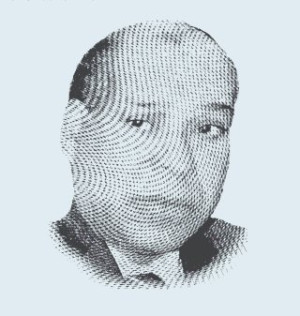
On May 5, 1961, Tunisia's late President Habib Bourguiba paid a state visit to the United States at the invitation of President John F. Kennedy. It was the first state visit hosted by Kennedy after taking office. The reception was exceptional: President Kennedy and First Lady Jacqueline Kennedy personally welcomed Bourguiba at Washington National Airport, the two presidents rode together in an open-top car, and greeted crowds lining the streets.
The young American president was celebrating his first official reception for a foreign head of state, while Bourguiba radiated vitality and delight at the lavish official and public welcome he received in the American capital. During his visit, Bourguiba toured several U.S. cities, showing particular interest in agricultural and urban development projects. The two leaders also held lengthy bilateral discussions.
Bourguiba dominated the conversations on bilateral, regional, and international affairs. At the time, the Cold War between the Western capitalist bloc and the Eastern communist bloc was shaping the international order. Tunisia, an Arab, African, and Mediterranean nation, stood on the geopolitical frontier between the rival camps.
Bourguiba was a seasoned politician and nationalist leader whose political character had been forged within a Tunisian, Arab, and Islamic environment. He had also lived in France—the colonial power ruling his country—as a student, activist, and political prisoner. Throughout his struggle for Tunisia's independence, he mastered political maneuvering in his dealings with fellow nationalists, the French colonial authorities, and even the Bey who nominally ruled Tunisia.
When Bourguiba met President Kennedy, leader of the world's most powerful nation and a central figure in the Cold War, there is little doubt that Kennedy's advisers had thoroughly briefed him on Tunisia's geography, economy, and society. Tunisia was viewed as a strategically located state whose position made it valuable in Washington's global contest with the Soviet bloc, particularly given its proximity to the Mediterranean.
Yet Bourguiba was no less an accomplished strategist. A skilled negotiator, he had long been accustomed to navigating turbulent political waters.
He spoke at length with Kennedy about Algeria's war of independence, emphasizing the immense sacrifices made by the Algerian people under French colonial rule. Bourguiba appealed directly to the American president:
"I ask the United States to throw its political weight behind the Algerian people, who have sacrificed one million of their sons in the struggle for freedom."
He also discussed the Palestinian issue, presenting the position he maintained throughout his presidency: implementation of United Nations Resolution 181, providing for the establishment of a Palestinian state alongside the State of Israel.
Turning to international affairs, Bourguiba stressed Tunisia's commitment to neutrality. Tunisia, he explained, would not align itself with either side in the global confrontation. Instead, it was committed to one overriding objective: developing the country, overcoming underdevelopment, and achieving prosperity.
As Kennedy settled into the White House, he was eager to understand how leaders of the developing world—particularly Arab leaders—viewed international politics.
At the time, prevailing American perceptions of Arabs were largely negative. In his memoirs, former President Dwight D. Eisenhower, reflecting on his service as a military commander in North Africa during World War II, described Arabs as impoverished and lazy, and elsewhere characterized them as emotional and prone to hasty judgments. It is entirely possible that Kennedy had been exposed to similar assessments before meeting Bourguiba, although there is no evidence that he had specifically read Eisenhower's views.
Years later, Ahmed Ben Nour, Tunisia's ambassador to Italy and formerly Director-General of Public Security under Bourguiba, became my neighbor when I was Libya's ambassador in Rome. During many long conversations, Ben Nour spoke passionately about Bourguiba's personality, political vision, and even defended some of his shortcomings.
Whenever our discussions turned to Bourguiba's foreign policy, Ben Nour inevitably returned to the president's visit to Washington. In his view, what Bourguiba told Kennedy perfectly reflected the essence of his character, patriotism, and political philosophy.
At the conclusion of their meeting, Kennedy reportedly asked:
"Mr. President, what do you want from America? Do you need money or weapons?"
Bourguiba replied:
"Thank you, Mr. President. I want neither money nor weapons. I only ask for lentils and milk—a gift from your friendly people to the Tunisian people."
Tunisia's Foreign Minister, Sadek Mokaddem, who accompanied Bourguiba on the visit, later asked the president why he had requested lentils and milk instead of financial or military assistance.
Bourguiba answered:
"I want to fill our schools with them. Parents will send their children to school to be fed, while I will educate them."
After reading Dr. Mouldi Lahmar's book, which contains an extensive interview with Mohamed Sayah, secretary-general of the Constitutional Party during Bourguiba's era, I became convinced of the truth of what Ambassador Ben Nour had told me.
Bourguiba believed that education was the strongest army a nation could possess—the true guarantor of its security and the foundation of its progress. He often repeated:
Originally published in Asharq Al-Awsat
Most read