
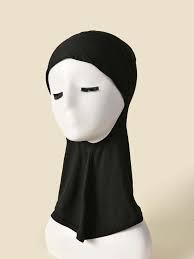
The issue of veiling in modern Arab thought was never merely a juristic debate concerning women’s clothing. Since the late nineteenth century, it evolved into one of the most symbolic and contested questions connected to modernity, identity, reform, and the relationship between the Arab-Islamic world and the West.
The veil therefore emerged not simply as a religious matter, but as a cultural, political, and social symbol tied to women’s position within society and to the broader civilizational project pursued by Arab intellectual elites under the pressures of colonialism and increasing engagement with Europe.
Consequently, the debate surrounding the veil was not fundamentally about a piece of cloth or a social custom. Rather, it reflected a deeper conflict between competing visions of reform: one seeking renewal from within the Islamic tradition, and another arguing that genuine progress required adopting European models of society, politics, and culture.
Between these competing trajectories, women became a central arena of ideological struggle, while the veil itself turned into a symbolic marker representing the complex relationship between religion and modernity, as well as between local identity and colonial cultural pressure.
First: The Arab Renaissance and the “Woman Question”
In the late nineteenth and early twentieth centuries, Egypt and the broader Arab world experienced a major intellectual transformation fueled by the expansion of print culture, journalism, educational missions to Europe, and the emergence of a new class of intellectuals influenced by modern European thought.
Within this environment, the question of renaissance and progress became central to Arab intellectual discourse: Why had Muslims declined while the West advanced? And how could society and the state be reconstructed?
From within this broader inquiry, the issue of women emerged as one of the key indicators of civilization and backwardness. Some thinkers argued that improving women’s education and social status was essential for societal progress, while others believed that focusing excessively on veiling and gender mixing primarily served colonial agendas rather than genuine reform.
Figures such as Rifa‘a al-Tahtawi and Muhammad ‘Abduh played important roles in opening the debate regarding women’s place in society. Yet, despite their reformist tendencies, they did not advocate a rupture with Islamic principles. Rather, they sought to reconcile Islamic values with the demands of modernity.
Muhammad ‘Abduh, for instance, argued that the crisis did not lie in Islam itself, but in intellectual stagnation and rigid interpretations of religion. For him, reform required reviving ijtihad and reconnecting religious texts to their broader ethical objectives.
Second: Colonialism and the Reconstruction of the Muslim Woman’s Image
The debate surrounding veiling cannot be understood independently from Orientalist and colonial discourse, both of which played central roles in shaping Western representations of Muslim women.
Throughout the nineteenth century, colonial powers increasingly used the “woman question” as a justification for intervention in Muslim societies. The veil was portrayed in Orientalist literature as a symbol of female oppression and Eastern backwardness, while Europe presented itself as morally and civilizationally superior.
Within this framework, the discourse of “women’s liberation” became deeply intertwined with the colonial “civilizing mission,” through which Western powers claimed to rescue Eastern societies from their alleged inferiority.
The writings of Lord Cromer in colonial Egypt reveal this contradiction clearly. While criticizing the veil and presenting himself as a defender of Egyptian women, Cromer simultaneously opposed women’s suffrage in Britain.
This contradiction demonstrates that colonial discourse was less concerned with women’s rights than with producing symbolic Western superiority and depicting Islam as incompatib
Most read