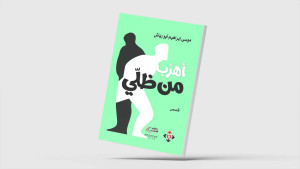


In her short story collection Chinese Earrings Maggie Would Never Wear, Egyptian novelist and writer Doha Assi turns everyday life into the narrative space through which she explores the impact of global transformations. Through seemingly ordinary paradoxes, she places her characters in direct confrontation with politics and economics, compelling them to redefine themselves amid overlapping circles of social and cultural change.
Recently published by Dawwen Publishing House in Cairo, the collection is distinguished by its dense symbolic texture. Material objects—including the mobile phone, jewelry, a McDonald's meal, and an insurance policy—are transformed into narrative codes through which the author examines shifts in systems of values and their impact on personal identity. The stories ultimately privilege history as it is written in homes, wallets, and memory rather than in official chronicles.
Across twenty-five short stories, Assi investigates human vulnerability through understated situations that lure her protagonists into unfamiliar territories, allowing them to experience the temptations of modern life from multiple perspectives. In The Gamble of Five Questions, the heroine's fiftieth birthday coincides with a voice message inviting her into the deceptive world of online lotteries and endless possibilities:
"Sherry was not in any real financial need that would have driven her to follow the message she received while browsing the internet, informing her that she had won the latest iPhone free of charge."
From that moment onward, the story is no longer concerned with the iPhone itself. Instead, it explores how consumer culture manufactures desires that had never previously existed, driving individuals to pursue possibilities that gradually occupy the forefront of consciousness. In this sense, the iPhone becomes less an object of desire than a producer of desire.
This symbolism is closely connected to the recurring dualities that shape the collection: the material versus the symbolic, market value versus remembered value. In An Impossible Theft, the protagonist awakens with a face that is "clear and radiant, yet expressionless," prompting an introspective journey through the milestones of her life. Simultaneously, the narrative interrogates the beauty industry as a mechanism designed to erase "expression lines"—and with them, the individuality that distinguishes one human face from another under the banner of perfection.
In A Wristwatch, the narrative creates tension between two conflicting systems of value. The police cannot comprehend the heroine's insistence on reporting the theft of a plastic watch, repeatedly asking whether it was made of gold or adorned with diamonds. The protagonist, however, clings to her own account, preserving the watch as a vessel of her personal history. The story thus raises an implicit question: can one's personal history be assigned a market price—or erased altogether simply because it has no commercial value? Through the repeated rhythm of police interrogation, the narrative oscillates between accusation and defense, reaching its emotional climax in the conflict between monetary worth and sentimental attachment.
The collection's title story, Chinese Earrings Maggie Would Never Wear, employs the adjective "Chinese" on multiple levels. It refers not only to the country the protagonist visits on a business trip but also invokes the colloquial Arabic usage of "Chinese" as shorthand for imitation or counterfeit products. Jewelry consequently becomes a means of negotiating economic reality, illustrating how financial crises reshape people's relationships with material possessions:
"Layla remembered how economic conditions in her country had deteriorated and gold prices had soared, making Chinese gold the ideal solution for preserving appearances. Many women sold their genuine jewelry and replaced it with imitation gold so that no one would notice their declining circumstances."
This reading becomes especially apparent in Troika, where the opening of Moscow's first McDonald's restaurant in the early 1990s assumes significance far beyond a routine commercial event. The long queue outside the American restaurant becomes a symbol of a world undergoing a profound transformation in its balance of power:
"Their longing to feel the golden French fries between their fingers outweighed every sense of exhaustion. Neither had ever dreamed of eating a Big Mac sandwich in the heart of the Soviet capital."
A simple fast-food meal thus becomes a historical document marking the world's transition from the strategic accommodations of the Cold War to the age of globalization and economic expansion.
The objects populating Assi's stories do more than preserve memory or symbolize historical change; they occasionally acquire voices and wills of their own. In A Family Quarrel, household electrical appliances drown out the voices of the family members, creating a fantastical equation in which machines become humanized while humans are increasingly mechanized. Each struggles to gain recognition from the other.
This fantastical blending of identities extends to the construction of characters and places. Names such as "A" and "أ," along with expressions like "the big country" and "the prestigious newspaper," populate a world where distinctions between individuals and locations gradually dissolve. Cities and commercial spaces lose much of their uniqueness. This logic reaches its culmination in The Party Organizers, where the heroine's lost suitcase at a vast international airport becomes a metaphor for a world that normalizes difference by reproducing sameness and erasing individuality and history:
"Globalization has made all suitcases alike, all airports alike, and all clothes alike—but it has failed to make faces alike."
The transformations chronicled throughout the collection extend beyond consumerism to encompass changing attitudes toward work and migration. Several stories revisit the era of expanding labor migration to the Gulf states. In The Insurance Policy, the anxiety of securing one's children's future evolves into a dark irony in which death ultimately proves more economically profitable than life.
Originally published in Asharq Al-Awsat.
Most read