Iraq on Iran's Front Line
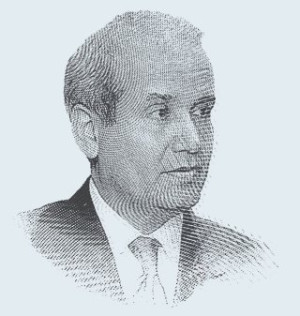
The first seventy days of Prime Minister Ali Falih Al-Zaidi's tenure revived a sense of optimism among many Iraqis that had been absent for years. His administration moved swiftly against corruption, sought to reform dysfunctional state institutions, attempted to place all weapons under state authority by demanding that militias surrender their arms, and launched an ambitious investment and economic reform agenda that reportedly received a favorable reception in Washington.
That momentum, however, was abruptly disrupted. Iran, according to many observers, effectively derailed the prime minister's reform program by drawing Iraq into a broader regional confrontation. Much like Lebanon and Yemen, Iraq has increasingly become another arena through which Tehran projects its influence. Iraqi territory and citizens have been used as a platform for attacks against several regional states, including Saudi Arabia, Jordan, and U.S. forces. Such attacks are not merely assaults on neighboring countries; they also represent an infringement upon Iraq's own sovereignty and an attempt to transform the country into yet another forward operating front for Iran's regional agenda.
Beyond the militias aligned with the Islamic Revolutionary Guard Corps (IRGC), it is difficult to imagine that most Iraqis welcome being dragged into a conflict that serves neither their national interests nor their aspirations for stability. This sentiment was echoed by Muqtada al-Sadr, leader of Iraq's Shiite National Movement, who recently declared that "Iraq and its people need peace. We have had enough of wars that have exhausted all our resources."
The current crisis has reinforced a reality that many Iraqis have recognized for years: Iraq has paid a heavy price for Iran's expansive influence. Tehran has allegedly used Iraq as a corridor for circumventing international sanctions, a channel for moving oil exports, a financial conduit supporting its regional activities, and a marketplace through which billions of dollars have flowed. At the same time, critics argue that this influence has undermined Iraq's stability, weakened its economy, discouraged investment, disrupted successive governments, and strained Baghdad's relations with both Arab states and the broader international community.
Today, that influence appears to be entering a new phase. Rather than merely maintaining political leverage inside Iraq, Tehran is increasingly seen as seeking to transform the country into a proxy battlefield from which it can wage its confrontation with the United States and several regional powers without engaging directly.
Within a single day, much of what the new prime minister had attempted to accomplish in his first two months was overshadowed by renewed regional tensions. As Iran's influence has receded in parts of Lebanon and Gaza, Iraq appears to be assuming greater strategic importance as an alternative military front. Should Iraqi borders remain open to the operational activities of the Revolutionary Guard and its affiliated groups, the country risks sinking even deeper into instability, institutional weakness, and economic deterioration.
Healthy relations between neighboring states can only be sustained through mutual respect for sovereignty. It was precisely this principle that Muqtada al-Sadr emphasized in his statement, noting that Iraq had never served as a launching ground for attacks against the Islamic Republic. He therefore urged the Revolutionary Guard not to target Iraqi territory while simultaneously calling on armed militias to refrain from providing Gulf Arab states with pretexts for retaliatory strikes inside Iraq.
The central question now is whether the Iraqi government possesses both the political will and the institutional capacity to resist Iran's deeply entrenched influence. Iraq's political leadership faces a historic opportunity to reject the militarization of the state, prevent the further "militia-ization" of society, and keep Iraq from being drawn into a regional war that neither its citizens nor its Arab neighbors seek.
Meanwhile, Tehran has made little effort to conceal its ambitions. Rather, it increasingly presents Iraq as a sphere of influence whose strategic orientation is no longer open to question. Yet rejecting this narrative and reaffirming the independence of Iraqi decision-making would likely receive broad popular and institutional support. Iraq has overcome profound crises and political divisions over the past two decades, and many believe it remains capable of doing so once again.
The current confrontation therefore represents more than another episode of regional instability. It is a defining test of both the Iraqi government's resolve and the Iraqi people's determination to redefine the country's relationship with Iran on the basis of sovereignty, mutual respect, and independent national decision-making.
Iraq's geopolitical position is undeniably complex. Situated between competing regional powers, Baghdad must carefully balance its foreign relations while safeguarding its sovereignty. Tehran insists that Iraqi territory must never be used against Iran, yet at the same time it continues to support and arm several Iraqi militias that operate outside the state's chain of command. This dual approach directly challenges the state's exclusive right to bear arms and undermines the central authority of Iraqi institutions. Moreover, directing these groups toward confrontations with neighboring countries risks gradually pushing Iraq toward the Lebanese model—a trajectory that threatens state institutions, national unity, and long-term stability.
Despite these challenges, the new prime minister succeeded within just two months in restoring a significant measure of hope among Iraqis from diverse political and social backgrounds. His early reform efforts generated widespread public support and renewed confidence in the possibility of rebuilding the state and achieving sustainable development. Whether that momentum can be maintained will largely depend on his ability to address the single most consequential issue confronting modern Iraq: ending the existence of armed groups operating outside state authority and restoring the state's exclusive monopoly over the legitimate use of force. Only then can Iraq realistically aspire to become a stable, sovereign, and prosperous nation.
Originally published in Asharq Al-Awsat.
Most read