Former Yemeni Minister: Yemen’s Conflict Extends Beyond Its Borders, Threatening Regional Security and the Bab al-Mandab Strait

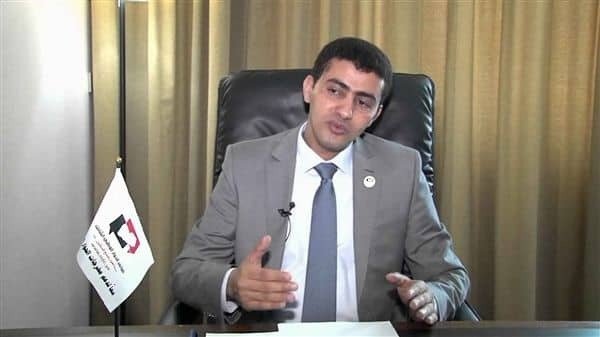
Yemeni politician Dr. Yasser Al-Ruaini, former Minister of State for the Implementation of the National Dialogue Conference Outcomes in the Yemeni government, held the Houthi group responsible for the military escalation, saying that its actions serve Iran’s agenda and aim to seize control of the Bab al-Mandab Strait while putting pressure on Gulf states and the global economy, coinciding with the closure of the Strait of Hormuz.
Al-Ruaini said the Houthis had violated a ceasefire that had held for four years by launching attacks on Mocha and the Bab al-Mandab Strait. He noted that government forces had regained control of the strait and the islands overlooking it.
He attributed the Houthis’ growing military capabilities, including missiles that he said have a range exceeding 2,000 kilometers, to Iranian support, the smuggling of military technology and expertise, and the presence of experts from Iran, Hezbollah, and Iraq’s Popular Mobilization Forces in Yemen.
He called for support for government forces and the opening of military fronts in Sana’a, Marib, Saada, Hajjah, Al-Dhalea, Al-Bayda, and Amran, arguing that a military resolution is the only way to end Houthi control.
The full interview follows.
Section One: Assessing the Houthi Escalation and Its Objectives
How do you interpret the Houthis’ latest escalation against Saudi Arabia? Is the group seeking to impose new conditions on Riyadh, or are its actions linked to broader regional calculations, particularly its relationship with Iran?
I believe the Houthis have sought to promote the idea that their war is against the Kingdom of Saudi Arabia rather than the Yemeni government. They have taken advantage of developments within the institutions of the internationally recognized government, including the decision to transfer power to a designated, unelected leadership.
However, in my assessment, the timing of their actions was driven by Iran’s desire to control the Bab al-Mandab Strait, strangle the Gulf region, and influence the global economy following the closure of the Strait of Hormuz.
The reality is that the Houthis are at war with the Yemeni state, whose institutions they overthrew and whose people they have sought to impose their agenda upon through violence. Their confrontation is not limited to the Kingdom of Saudi Arabia.
Saudi Arabia supports the Yemeni government in ending the coup, restoring the state, and extending its authority over the entire territory of Yemen, at the request of the Yemeni government.
I do not believe that presenting specific conditions or demands would stop Houthi attacks against Saudi Arabia, the Yemeni people, or international shipping. In my assessment, this group relies on violence and has ambitions that are not confined to any particular limits.
In my view, the years of conflict in Yemen have demonstrated that a military resolution is the only way to end what I describe as Houthi terrorism against Yemen, Saudi Arabia, and maritime navigation in the Red Sea.
Section Two: Iran’s Role and Its Implications for Yemen and the Region
How do you assess Iran’s role in supporting the Houthis? What impact does this support have on the balance of power within Yemen and on regional security?
The Houthi militias receive support from Iran and seek to impose the Iranian agenda inside Yemen. They use weapons against civilians and blow up the homes of their opponents, displacing large numbers of families and forcing hundreds of thousands of people to flee their homes.
As you have recently heard, when the Houthi militias took control of Mocha, more than 350 families were displaced from the city, despite Mocha being a relatively small town.
In areas under Houthi control, opponents of the militias cannot remain, while residents are forced to stay silent inside their homes. According to what we have observed, the group imposes various forms of levies and taxes, including what it calls zakat and khums, in addition to looting, assaults, and kidnappings.
I believe Iranian financial and military support, alongside the transfer of expertise and technology, has contributed to the development of Houthi military capabilities. In my assessment, Iran is transferring some of its military technologies and expertise to the group. Iranian experts, Iraqi personnel affiliated with the Popular Mobilization Forces, and Lebanese experts from Hezbollah are also present in Yemen to train its members and transfer weapons-related expertise.
The risks posed by this development extend beyond Yemen and Saudi Arabia to affect regional security and international maritime navigation.
In my view, regional and international leniency, including that of the coalition supporting the internationally recognized government, has also given the group room to develop its military capabilities.
Section Three: The Stalemate in Peace Efforts and the Case for Reconsidering Containment
To what extent have Houthi actions undermined the prospects for peace in Yemen? Has diplomatic containment proved effective, or do recent developments require a reassessment of the current approach?
We must first recognize that the conflict in Yemen is between the Houthi coup group and the Yemeni government, represented by its legitimate constitutional authorities and supported by the coalition led by Saudi Arabia. Two approaches have been proposed for dealing with this conflict: peace and war.
Unfortunately, the Houthi group has worked to obstruct United Nations and regional peace efforts. Even understandings reached at various stages of dialogue have subsequently been repudiated by the group, which has refused to honor them.
In my assessment, the Houthi militias have left no genuine room for peace. They have opposed multiple initiatives, failed to honor agreements signed by the legitimate government, and rejected proposals put forward by the international community.
Their actions have caused extensive harm to Yemenis. Today, the group also threatens international maritime navigation and attacks neighboring countries, including Saudi Arabia. It has also been accused of committing serious violations against civilians and engaging in practices that contravene international humanitarian law.
What must be done now is to restore an accurate understanding of the conflict in Yemen, strengthen the Yemeni government’s position, and provide it with military support in confronting the Houthis, with the ultimate aim of restoring the state and achieving peace in Yemen and the wider region.
What is the cost of maintaining a state of “neither war nor peace” in Yemen and the region? Can political understandings lead to a lasting settlement while violations and escalation continue?
I believe that continued stalemate gives the Houthis more time to develop their military capabilities, particularly given Iranian support, which has enabled them, in my assessment, to obtain new technologies for missiles and unmanned aerial vehicles.
From my perspective, the main reason the confrontation has reached the point of attacks on civilian objects and infrastructure in Saudi Arabia is the periods of calm that allowed Iran to supply the Houthis with new military technologies.
The longer the Houthis retain these capabilities, the greater the anticipated cost of addressing the threat they pose in the future. Therefore, I believe any political process must address the underlying causes of the conflict, end the coup, and restore Yemen’s state institutions.
Section Four: Responsibility for the Escalation and the Limits of Military Confrontation
To what extent have Saudi-backed military operations in support of the Yemeni government contributed to the renewed confrontation? How do you view the relationship between protecting Saudi security and preventing the war from expanding?
I believe the Houthis initiated the renewed fighting after four years of a ceasefire, when the group attacked the city of Mocha and took control of the Bab al-Mandab Strait and the islands overlooking it. Government forces subsequently regained control of the strait and the surrounding islands, according to my understanding of developments on the ground.
The Houthi militias have also continued their attacks on Taiz and their shelling of cities and civilian infrastructure.
I do not believe the main problem is the expansion of Houthi attacks so much as the absence of an effective response. In my view, addressing these attacks requires supporting the battlefronts and activating military fronts in Sana’a, Marib, Saada, Hajjah, Al-Dhalea, Al-Bayda, Amran, and other areas of confrontation.
I believe periods of de-escalation have allowed the Houthis to develop their military capabilities with Iranian support, contributing to growing threats against Yemen, Saudi Arabia, and international maritime navigation.
Section Five: Developments on the Ground in Taiz and at Bab al-Mandab
What is the nature of the military developments in Taiz, and what are the humanitarian and security consequences of the siege being imposed on the city once again?
The Houthi militias attacked the Taiz area, a city they had besieged for more than eight years before the blockade was partially broken through mountain routes. Today, the militias have resumed their siege of the city, whose population exceeds four million, tightening their grip on the city and its residents.
They have employed various forms of violence, including attacks on residential neighborhoods and the targeting of civilians.
Unfortunately, in my assessment, the Houthi militias are committing serious violations against Yemeni civilians in Taiz. These include acts that could be described as crimes against humanity, as well as violations of international humanitarian law.
What measures has the Yemeni government taken in response to the Houthi escalation, and what are the most significant developments on the various fronts?
The Yemeni government, represented by the Presidential Leadership Council and the government itself, has announced a military campaign in response to Houthi attacks.
According to my observations, Yemeni forces are making significant progress in retaking areas along the western coast, including Bab al-Mandab. Government forces are also moving in Marib, Al-Jawf, and parts of Taiz Governorate, with the aim of repelling attacks and regaining control of certain areas.
Military operations have also included strikes described by the guest as precision strikes. Following the reactivation of the Yemeni combat air force, these strikes targeted Houthi positions in Sana’a and the governorates of Ibb, Dhamar, and Taiz, as well as areas of active fighting and front lines. Unmanned aircraft have also been introduced into the operations.
The Yemeni government is pursuing an approach aimed at imposing stability and peace through force, given the Houthi militias’ refusal to engage in the peace process.
Section Six: Options Available to the Legitimate Government and the Saudi-Led Coalition
Given the continued escalation and the Houthis’ rejection of peace initiatives, what options are available to the Yemeni government and the coalition led by Saudi Arabia?
I believe the only option available to the legitimate government and the coalition is to confront the Houthis militarily, disarm them, extend state authority across all Yemeni governorates, including Saada, and end the Houthi coup, which has continued for more than 12 years.
I also believe that restoring the state requires empowering government forces to fulfill their role and addressing the shortcomings that prevented military operations from being completed in previous stages.
Section Seven: Yemen’s Future and Possible Scenarios
Amid the escalation along the Saudi front and military movements near Bab al-Mandab, what scenarios are likely to emerge in the coming period? Can the confrontation be contained through a political settlement that safeguards Saudi security, Yemen’s sovereignty, and the unity of its institutions, or is the conflict heading toward further internationalization and regional escalation?
In my view, stability and security cannot be achieved for Yemen, Saudi Arabia, or international maritime navigation in the Red Sea as long as the Houthi group continues to control any part of Yemen.
I believe developments over the past decade have demonstrated the group’s transformation from a local armed movement equipped with light weapons into a force possessing more advanced military equipment and technologies, including missiles with a range exceeding 2,000 kilometers.
I attribute this development to two main factors. The first is Iranian financial and military support and the transfer of expertise and technology. The second is what I consider regional and international leniency in dealing with the group.
At the domestic level, I believe the Houthis are experiencing a decline in popular support, and that government forces could regain the initiative if they receive the necessary weapons and assistance.
Observers of developments in Yemen, in my assessment, can see that battles launched by forces loyal to the legitimate government, with coalition support, have achieved their objectives when military operations continued. Setbacks occurred when the fronts became inactive.
Therefore, I believe that supporting the Yemeni army and opening military fronts could significantly shift the balance of power and might lead to a decline in Houthi capabilities within a matter of weeks.
Ultimately, as long as the Houthis continue to control parts of Yemen, the threat to Yemen, Saudi Arabia, and international maritime navigation will persist, in my view, unless the Yemeni state succeeds in restoring its authority over the entirety of its territory.
Most read


Read also